What Makes a High-Converting Website? 8 Proven Elements
Discover the 8 proven elements that turn visitors into customers. From Core Web Vitals to compelling CTAs, learn what drives conversions for Italian businesses.
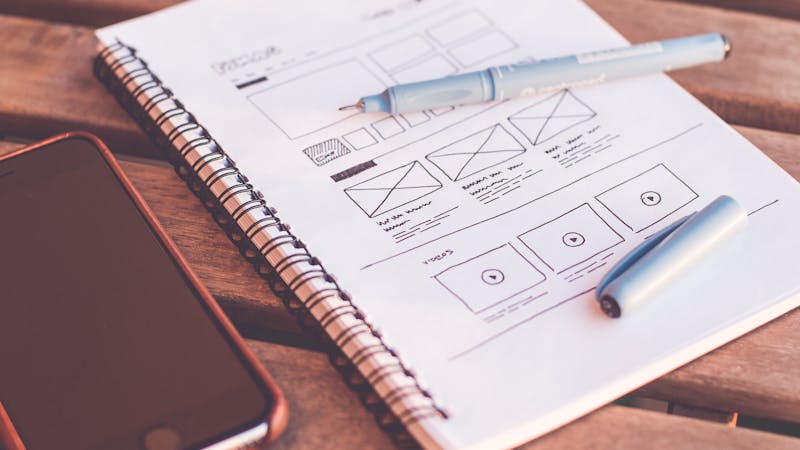
Avere un sito web non basta. Thousands of Italian businesses invest in a digital presence every year, only to watch visitors bounce without taking any meaningful action. The difference between a website that generates leads and one that simply exists comes down to a handful of well-documented design and content principles — principles that are backed by data, not guesswork.
At Pure Design, we have worked with SMEs across Milan, Rome, Turin, and beyond, and we see the same conversion killers appear on site after site. In this article, we break down the eight elements that consistently separate high-performing websites from digital brochures collecting dust on the internet.
1. A Crystal-Clear Value Proposition Above the Fold
The “above the fold” area — everything visible before a user scrolls — is the most valuable real estate on your website. Research from the Nielsen Norman Group confirms that users spend 57% of their page-viewing time above the fold. If your value proposition is not immediately obvious, you have already lost a significant portion of your audience.
Your value proposition should answer three questions in five seconds or fewer:
- What do you do?
- Who do you do it for?
- Why should they choose you over a competitor?
For an Italian business, this often means being explicit about your geographic reach, your language capabilities, or your understanding of the local market. A Milan-based accounting firm, for example, should not hide behind vague language like “professional services.” Instead: “Consulenza fiscale per PMI milanesi — risparmi fino al 30% sulle imposte” communicates value, audience, and outcome immediately.
Avoid the common trap of leading with your company name or a generic welcome message. Lead with benefit.
2. Trust Signals: Testimonials, Logos, and Certifications
Conversion is fundamentally a trust problem. A visitor who does not trust you will not buy from you, fill in your form, or even pick up the phone. Trust signals are the design elements that lower this psychological barrier.
The most effective trust signals include:
- Client testimonials with full name, company, and ideally a photo
- Logo walls featuring recognisable clients or partners
- Third-party review scores from platforms like Google Business Profile or Trustpilot
- Certifications and awards relevant to your industry
- Press mentions (Italian publications like Il Sole 24 Ore or Corriere della Sera carry significant weight with local audiences)
According to HubSpot’s marketing statistics, 88% of consumers trust online reviews as much as personal recommendations. In Italy, where business relationships are heavily relationship-driven (fiducia is everything), social proof from local clients is particularly powerful.
Position these elements close to your primary calls-to-action, not buried in a footer. The closer the trust signal is to the conversion point, the more effective it will be.
3. Fast Load Times and Core Web Vitals
Page speed is not a technical nicety — it is a direct conversion driver. Google’s own research has shown that as page load time increases from one second to five seconds, the probability of a mobile user bouncing increases by 90%. Google’s web performance guidance provides detailed benchmarks, but the key metrics to focus on are the Core Web Vitals: Largest Contentful Paint (LCP), Interaction to Next Paint (INP), and Cumulative Layout Shift (CLS).
For Italian websites, this matters doubly because Google now uses Core Web Vitals as a ranking signal. A slow site does not just frustrate users — it ranks lower in search results, meaning fewer visitors reach your conversion funnel in the first place.
Practical steps to improve load speed:
- Compress and convert images to modern formats such as WebP
- Use a CDN with Italian or European edge nodes to serve assets quickly to .it domain audiences
- Minimise render-blocking JavaScript and defer non-critical scripts
- Choose quality hosting — shared hosting from budget providers often introduces significant latency for Italian visitors
- Implement browser caching aggressively
Tools like Google PageSpeed Insights and web.dev/measure give you a free, actionable breakdown of where your site is losing performance points. Aim for an LCP under 2.5 seconds and a CLS score below 0.1.
4. Compelling CTAs with Urgency and Clarity
A call-to-action (CTA) is the pivot point between browsing and converting. Yet most CTAs we encounter on Italian SME websites are either invisible, vague, or competing with five other buttons for attention.
Effective CTAs share several characteristics:
- Specificity: “Scarica la guida gratuita” outperforms “Click here”
- Benefit orientation: Focus on what the user gets, not what they must do
- Visual prominence: Contrast colour, whitespace, and size all drive clicks
- Urgency without manipulation: Genuine scarcity or time-sensitivity (a seasonal promotion, limited availability) increases action rates without eroding trust
Moz’s conversion rate optimisation guide notes that even small changes to CTA copy can produce double-digit lifts in conversion rate. A/B testing your primary CTA should be a quarterly habit, not a one-time exercise.
For lead generation pages, keep forms short. Every additional field you add reduces completion rates. For an Italian e-commerce operating in a market where GDPR compliance is strictly enforced, be transparent about data use — a single checkbox with a clear privacy notice converts better than a wall of legal text.

5. Social Proof: Reviews, Case Studies, and Numbers
Social proof is the psychological phenomenon where people look to the behaviour of others to determine the correct course of action. On a website, this translates into specific content formats that signal to new visitors that others have already made this decision — and are glad they did.
The most conversion-relevant forms of social proof include:
- Quantified results: “Abbiamo aiutato oltre 200 PMI italiane ad aumentare il traffico organico del 150%” is far more compelling than “We help businesses grow.”
- Case studies: Detailed success stories with named Italian clients, before/after metrics, and a narrative arc perform exceptionally well in B2B contexts.
- Star ratings: Display your Google Business Profile rating or your Trustpilot score prominently. Italian consumers increasingly rely on these before making purchase or contact decisions.
- User-generated content: For e-commerce, customer photos and unboxing videos on product pages can increase conversion rates by 20–30%.
According to Semrush’s e-commerce conversion research, product pages with customer reviews convert at nearly 4x the rate of those without. If your WooCommerce or Shopify store is not collecting and displaying reviews, you are leaving significant revenue on the table.
6. Simple, Intuitive Navigation
Navigation that confuses users is navigation that kills conversions. The job of your menu is not to showcase every page on your site — it is to guide a visitor towards the action most likely to benefit both them and your business.
Principles of high-converting navigation:
- Limit primary navigation items to 5–7 at most. When everything is accessible, nothing is prioritised.
- Use descriptive labels: “Servizi” is acceptable; “Soluzioni di Marketing Digitale per PMI” in a mega-menu is visual noise.
- Include a persistent CTA in the navigation bar itself — a “Richiedi un preventivo” button that follows the user down the page
- Make your search function visible if you have more than 20 pages or an e-commerce catalogue
- Breadcrumbs help users understand where they are within a larger site structure, reducing abandonment on deep pages
The Nielsen Norman Group’s navigation research consistently finds that cognitive strain caused by complex navigation is one of the top drivers of site abandonment. When we audit Italian business websites, oversized mega-menus and duplicate navigation pathways are among the most common issues we find.
Our web design services always include a navigation audit as a core deliverable — because even beautifully designed pages fail to convert if the path to action is unclear.
7. Mobile Optimisation for an Italian Audience
In Italy, mobile devices account for well over 60% of web traffic across most sectors, with some verticals — particularly retail, food and beverage, and local services — seeing mobile shares closer to 75–80%. Despite this, a surprising number of Italian business websites still treat mobile as an afterthought.
Mobile optimisation goes beyond responsive design. It means:
- Touch targets sized appropriately — buttons and links should be at minimum 44×44 pixels to prevent mis-taps
- Readable typography without zooming — a base font size of 16px or larger is a sensible minimum
- Streamlined mobile forms — use input types (
tel,email,number) that trigger the appropriate mobile keyboard - Click-to-call functionality for phone numbers — essential for local service businesses
- Reduced pop-up usage on mobile, which Google penalises as intrusive interstitials
The Google Mobile-Friendly Test will give you an immediate read on whether your site meets baseline mobile standards. But passing that test is the floor, not the ceiling. The real question is whether your mobile experience actively facilitates conversion — or merely tolerates it.
For Italian e-commerce brands competing with large players on platforms like Shopify or self-hosted WordPress/WooCommerce stores, a mobile-first checkout flow is non-negotiable. Cart abandonment rates on mobile typically run 10–15 percentage points higher than desktop — much of that gap can be closed through deliberate mobile UX work.
8. Persuasive, Benefit-Focused Copywriting
Design attracts attention. Copy converts it. The words on your page carry the persuasive weight that transforms an interested visitor into a paying customer. Yet copywriting is consistently the most under-invested element of Italian SME websites.
The distinction between feature-focused and benefit-focused copy is the most important concept in conversion copywriting:
- Feature: “Il nostro software ha un’interfaccia drag-and-drop”
- Benefit: “Crei la tua campagna in 10 minuti, senza bisogno di un tecnico”
Benefit copy answers the customer’s implicit question: “What’s in it for me?”
Principles for persuasive web copy:
- Write for your specific audience, not a generic reader. An accountant serving artigiani in Lombardia has a very different audience from a SaaS company targeting CFOs in Rome.
- Use the language your customers use, not industry jargon. Mine this from Google Business Profile reviews, support emails, and sales call transcripts.
- Address objections proactively in your copy. If price is a common concern, acknowledge it and frame your value accordingly.
- Structure for scanners: Most users read in an F-pattern. Use subheadings, bullet points, and bold text to make key messages visible without reading every word.
- Include a clear next step at every natural pause in the content — do not make readers hunt for what to do next.
The developer.mozilla.org accessibility guidelines are also worth noting here: accessible copy — clear language, sufficient contrast, proper heading hierarchy — is not just an ethical requirement but a conversion asset. Users who can easily consume your content are users who can easily act on it.
For deeper guidance on copy strategy, Ahrefs’ content marketing blog covers the intersection of SEO and persuasion with particular rigour.
Putting It All Together
These eight elements do not operate in isolation. A fast-loading page with weak copy will underperform. Brilliant copywriting on a site with no trust signals will struggle to close. The highest-converting websites succeed because these elements work as a system — each one reinforcing the others to create a seamless journey from first impression to conversion.
The good news is that most Italian businesses are not competing against world-class digital teams. They are competing against other local businesses who have made the same common mistakes. Fixing even three or four of the issues outlined above can produce meaningful improvements in your conversion rate, whether your goal is leads, sales, bookings, or newsletter sign-ups.
If you are unsure where to start, a structured conversion audit will identify your highest-impact opportunities quickly. The investment is modest; the upside — even a 1–2% improvement in conversion rate — can represent tens of thousands of euros in additional annual revenue for a business with established traffic.
If you are ready to build a website that works as hard as your team does, request a free quote from Pure Design today. We bring together strategic thinking, Italian market expertise, and design craft to create digital experiences that convert visitors into loyal clients.
Ready to grow your digital presence?
Our team in Italy is ready to help. Get a free quote tailored to your business.