The Complete Website Redesign Guide: When, Why & How
Learn when your website needs a redesign, how to audit it, set goals, plan migration, and measure success. A practical guide from a Milan-based agency.

A website redesign is one of the most significant investments an Italian business can make in its digital presence. Whether you run a boutique hotel in Florence, an e-commerce store selling artisan goods, or a B2B software company in Milan, your website is often the first — and most lasting — impression you make on potential customers. Yet many businesses delay redesigns until the damage is already done: leads drying up, mobile users bouncing, and competitors pulling ahead in search rankings.
This guide walks you through the entire redesign process, from recognising the early warning signs to measuring success months after launch. No generic advice — just the actionable steps we’ve refined working with Italian businesses across sectors.
How to Know Your Website Needs a Redesign
Not every ageing website needs a full redesign. Sometimes targeted fixes — a faster hosting provider, a refreshed colour palette, a new landing page — are enough. But when multiple problems compound, a full redesign becomes the more cost-effective path. Here are the clearest signals.
Your Bounce Rate Is Stubbornly High
If Google Analytics shows that more than 70% of visitors leave after viewing a single page, your site is failing to communicate value or guide users toward the next step. For most Italian SMEs, a healthy bounce rate sits between 40–60%, depending on the sector. High bounce rates are rarely a single-problem issue — they signal slow load times, poor messaging, confusing navigation, or a combination of all three.
Your Mobile Usability Score Is Poor
Italy’s mobile internet penetration is among the highest in Europe. If your site was built before 2018 without a mobile-first approach, there is a good chance it scores poorly in Google Search Console’s mobile usability report. Broken layouts, tiny tap targets, and text that requires pinching to read are conversion killers — and they hurt your organic rankings too, since Google uses mobile-first indexing.
The Design Looks Dated
Design trends shift quickly. A site built in 2015 with a carousel banner, a sea of Lorem Ipsum, and stock photos of people in suits signals to visitors that your business may not be keeping up either. Benchmarking against competitors and against the Nielsen Norman Group’s usability guidelines can help you assess objectively whether your design is communicating trust — or eroding it.
Conversion Rates Are Below Industry Benchmarks
If your contact form, product pages, or service inquiry flows are converting at less than 1–2%, something is structurally wrong. According to data compiled by HubSpot, average landing page conversion rates across industries hover around 2–5%. Persistent underperformance usually points to unclear calls to action, weak copy, or a checkout or inquiry flow with too much friction.
You Have No CMS Access — or Your CMS Is Obsolete
If updating a blog post requires emailing a developer, or if your content management system is a custom-built relic that no agency will touch, you have a genuine operational problem. Modern CMS platforms like WordPress give marketing teams full control without touching code. If your team is working around your website rather than through it, a redesign is overdue.
Auditing Your Existing Site Before You Start
Jumping into a redesign without understanding what you currently have is one of the most common — and costly — mistakes. A proper audit protects you from losing SEO equity, high-performing content, and design elements that actually work.
Technical SEO Audit
Use a tool like Semrush or Ahrefs to crawl your existing site. Document every indexed URL, note which pages receive organic traffic, identify broken links, and flag any structured data or canonical tags that need to be preserved during migration. Italian .it domains can sometimes carry significant local SEO authority — losing that through a careless redesign can set your rankings back by six months or more.
Content Inventory
List every page on your site. Categorise each one as: keep as-is, rewrite, consolidate (merge with another page), or delete. High-traffic pages deserve particular attention — their URL structure, title tags, and internal linking patterns should be preserved or carefully redirected.
Analytics Deep Dive
Before any design decision is made, understand where your current visitors come from, which pages they visit, and where they exit. This isn’t just about what’s broken — it’s about understanding what works, so you don’t accidentally discard it. Pay special attention to your top entry pages, which often aren’t your homepage.
User Feedback
If you have live chat logs, support emails, or any form of user feedback, read them. Actual user complaints about navigation confusion, missing information, or broken features are gold. If you don’t have this data, even a short survey to recent customers can reveal surprising gaps.
Setting Clear, Measurable Goals
A redesign without defined goals is a redesign that will disappoint. Before any wireframe is drawn, align your team on what success looks like in measurable terms.
Typical goals for Italian businesses we work with include:
- Increase organic leads by 30% within six months of launch — tied to improved SEO structure and landing page quality
- Reduce mobile bounce rate from 75% to below 50% — achieved through responsive-first design and faster load times
- Increase e-commerce conversion rate from 0.8% to 2.5% — driven by improved product pages, simplified checkout, and trust signals
- Enable the marketing team to publish content independently — solved by migrating to a modern CMS
Each goal should have a baseline metric, a target, and a timeline. This framing also helps justify the investment to stakeholders and gives the design team a clear brief to work against.
Planning Content Migration
Content migration is where many redesigns go wrong. Moving from one CMS to another — say, from a legacy custom system to WordPress — requires careful planning to avoid URL changes that break inbound links, duplicate content issues caused by improper redirects, and loss of metadata that supports your organic rankings.
Map Old URLs to New URLs
Create a spreadsheet mapping every existing URL to its new destination. Any URL that changes needs a 301 redirect. For Italian businesses with .it domains, pay particular attention to pages that rank for localised Italian-language queries — losing a page that ranks for “agenzia web Milano” or “e-commerce artigianato italiano” can have immediate commercial consequences.
Rewrite with Intent
Content migration is an opportunity, not just a logistics exercise. Each page being migrated should be reviewed against your keyword strategy. If a service page currently ranks on page three for a relevant term, a rewrite informed by Moz’s on-page SEO guidance can push it to page one.
Preserve Structured Data
If your existing site uses schema markup — for reviews, products, events, or local business listings — document it carefully and ensure it is replicated or improved on the new site. Schema is particularly valuable for Italian businesses targeting local search results.
The Design Process: Phase by Phase
Understanding how a professional redesign unfolds helps you contribute effectively, manage internal stakeholders, and avoid the scope creep that inflates costs.
Discovery and Strategy
The first phase is about understanding your business, your users, and your competitive landscape. This typically involves stakeholder interviews, user research, competitor analysis, and a review of your audit findings. The output is a project brief and a sitemap that reflects your new information architecture.
Wireframing and UX Design
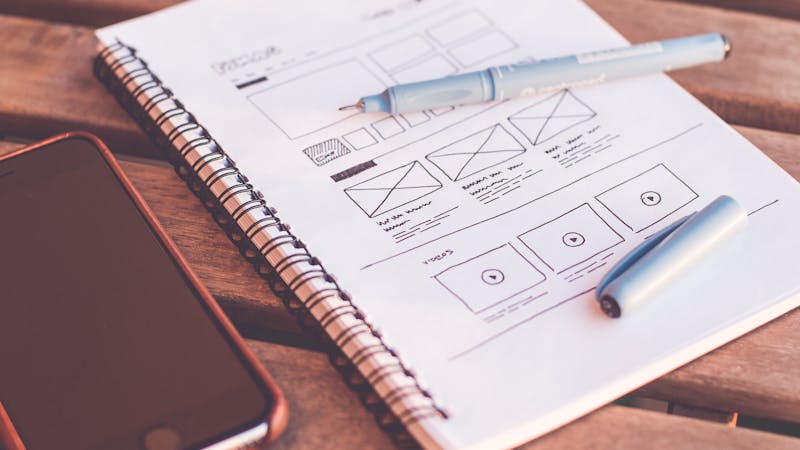
Before any colour or typography is applied, wireframes define the layout and user flow of each key page. This is where decisions are made about navigation structure, call-to-action placement, and content hierarchy. The web.dev performance and UX guidelines provide useful benchmarks at this stage — particularly around Core Web Vitals, which directly affect your Google rankings.
Visual Design
Once wireframes are approved, visual design brings the brand to life. For Italian businesses, this phase often involves refining or updating brand identity — typography choices, colour palettes, and photography styles that feel contemporary and credible to both Italian and international audiences.
Development
Development translates approved designs into a working website. For most Italian SMEs and mid-market businesses, we recommend building on WordPress with a performance-optimised theme and a clean page builder — or, for larger e-commerce operations, Shopify for its robust inventory management and payment localisation features, including support for Italian payment methods like Satispay and Klarna.
Pay close attention to MDN Web Docs’ accessibility guidelines during development. Web accessibility is not just good practice — it is increasingly a legal requirement in Italy under the “Legge Stanca” and European Accessibility Act obligations coming into force for more businesses.
Quality Assurance and Testing
Never launch without a structured testing phase. This should include:
- Cross-browser and cross-device testing — Chrome, Safari, Firefox, and Edge, across iOS and Android
- Performance testing — use PageSpeed Insights and aim for Core Web Vitals scores in the green
- Functional testing — every form, button, filter, and checkout flow tested end-to-end
- SEO pre-launch checks — confirm all 301 redirects are in place, robots.txt is not blocking indexation, XML sitemap is updated, and no canonical tags are pointing to the old domain
Measuring Success After Launch
Launch day is not the finish line — it is the starting gun. Post-launch measurement tells you whether your redesign delivered on its goals and where to invest next.
The First 30 Days
In the first month, focus on stability: monitor for 404 errors in Search Console, check that organic rankings are holding, and ensure tracking is firing correctly in Google Analytics. A small dip in rankings immediately after a redesign is normal, but a sharp drop in impressions warrants immediate investigation.
60–90 Days: Conversion Performance
By the two-to-three month mark, you should have enough data to assess whether conversion rates are moving in the right direction. Compare your core pages against pre-launch baselines. If a key landing page is underperforming against its goal, this is the moment to run A/B tests — headline variations, CTA copy, form length — rather than waiting.
Six Months: Organic Traffic and Lead Volume
The full SEO impact of a redesign typically takes four to six months to materialise. At this point, compare month-over-month organic sessions, keyword rankings for your priority terms, and lead or sales volumes against your pre-redesign baseline. This six-month review is also a good moment to assess whether your CMS is being used as intended — is the marketing team publishing content independently, or have old habits crept back?
Common Redesign Pitfalls to Avoid
Even well-intentioned redesigns stumble. The most common pitfalls we see when inheriting troubled projects from Italian businesses include:
- Redesigning without data — making design decisions based on aesthetic preference rather than user behaviour
- Ignoring existing SEO equity — launching a new site without a redirect strategy and watching organic traffic collapse
- Letting scope creep delay launch — adding features mid-project until the site never launches at all
- Skipping user testing — presenting a polished design to stakeholders but never watching a real user try to navigate it
- Treating launch as the end — failing to allocate budget for post-launch optimisation, content, and measurement
A successful redesign is not a project with a hard end date — it is the beginning of a more deliberate, data-informed relationship with your website.
If you are considering a website redesign and want expert guidance from a team that understands the Italian market, we are here to help. Explore our web design service to see how we approach projects, or get a redesign quote and we will respond with a tailored proposal within one business day.
Ready to grow your digital presence?
Our team in Italy is ready to help. Get a free quote tailored to your business.